
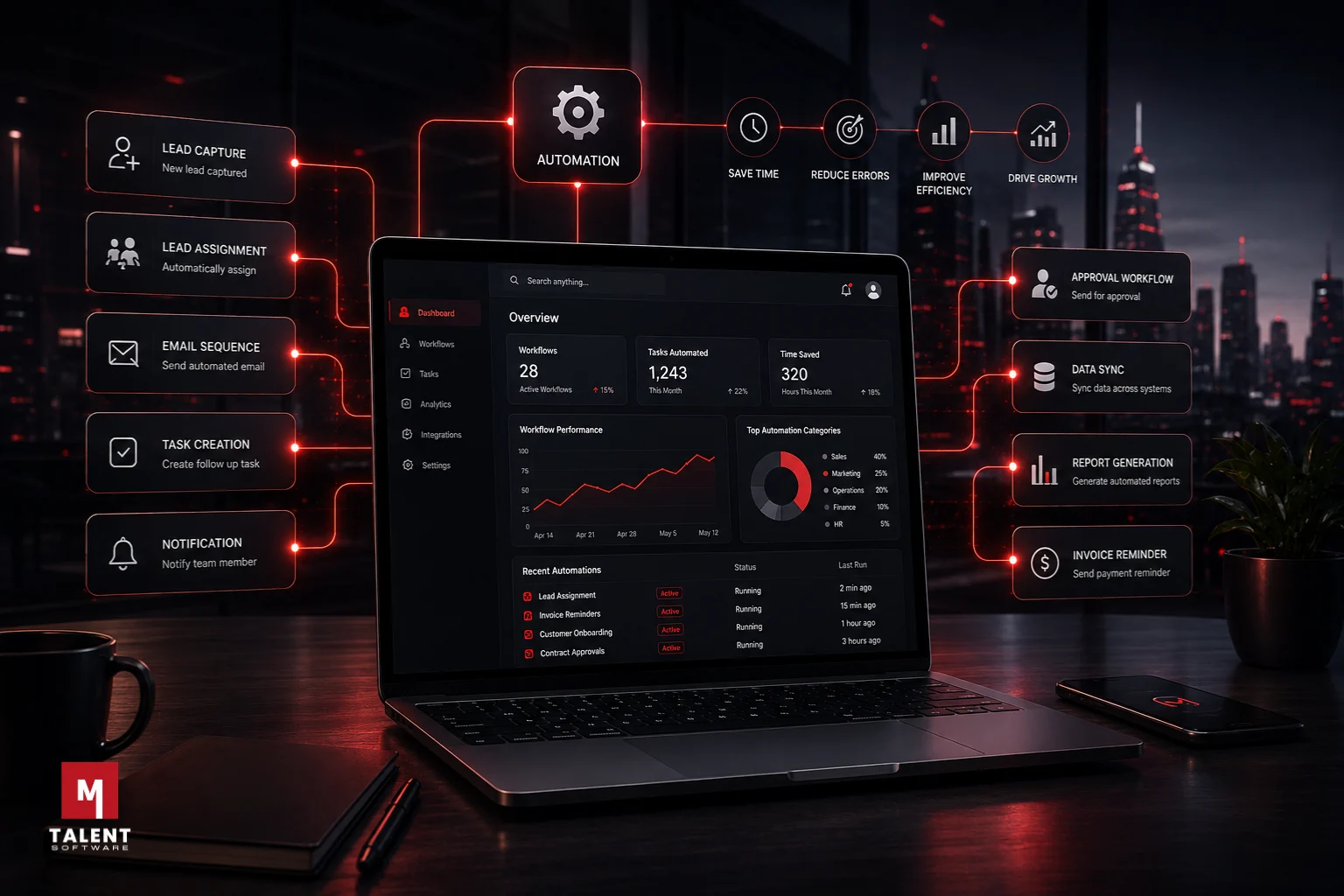

Most businesses don’t realize how much time is lost to repetitive manual work until operational growth starts creating bottlenecks across the organization.
Tasks that once seemed manageable begin slowing teams down:
- lead follow-ups
- approvals
- reporting
- onboarding
- internal communication
- customer management
As operations expand, manual processes become increasingly expensive.
Not only in terms of time – but also through:
- delayed response times
- human error
- poor visibility
- inconsistent workflows
- lost revenue opportunities
This is why workflow automation has become one of the most important operational priorities for modern businesses.
The goal of automation is not to replace people.
It’s to eliminate repetitive operational friction so teams can focus on higher-value work.
Here are 10 business processes companies should consider automating immediately.
1. Lead Assignment & DistributionMany sales teams still manually assign incoming leads through emails, spreadsheets, or messaging platforms.
This creates delays and often results in leads being ignored or forgotten entirely.
Automated lead routing ensures:
- leads are assigned instantly
- sales teams respond faster
- opportunities are tracked properly
- no inquiries are missed
Modern CRM systems can automatically distribute leads based on:
- department
- territory
- service type
- workload
- priority level
Faster lead response times often translate directly into improved conversion rates.
2. Customer Follow-Up SequencesManual follow-ups are one of the biggest operational inefficiencies in sales and customer management.
Without automation, businesses rely heavily on employees remembering:
- callbacks
- emails
- meeting reminders
- status updates
This creates inconsistent customer experiences and missed opportunities.
Automated workflows can manage:
- email sequences
- reminders
- sales follow-ups
- onboarding communication
- nurture campaigns
This improves consistency while reducing administrative workload across teams.
3. Internal Approval ProcessesMany organizations still manage approvals manually through long email chains or messaging platforms.
This often slows down:
- procurement
- hiring
- finance requests
- operational decisions
- client onboarding
Workflow automation creates structured approval pipelines that improve visibility and reduce delays.
Teams can instantly track:
- approval status
- pending actions
- assigned stakeholders
- escalation requirements
This significantly improves operational efficiency across departments.
4. Reporting & Data ConsolidationManual reporting consumes enormous amounts of time in many businesses.
Employees frequently:
- export spreadsheets
- combine reports
- update dashboards manually
- gather data from disconnected systems
Automation tools can centralize reporting by syncing data across platforms in real time.
This allows leadership teams to access:
- live dashboards
- operational insights
- sales performance metrics
- financial visibility
- workflow tracking
Without waiting for manual report preparation.
5. Employee OnboardingOnboarding often involves repetitive administrative work:
- account setup
- document collection
- training coordination
- approval tasks
- HR communication
Automated onboarding workflows streamline these processes while improving consistency for new employees.
This creates a smoother experience and reduces delays during operational scaling.
As businesses grow, onboarding automation becomes increasingly valuable.
6. Customer Support Ticket RoutingSupport teams can quickly become overwhelmed when requests are manually categorized and assigned.
Automation helps route support tickets based on:
- issue type
- urgency
- department
- customer priority
- service level agreements
This improves response times and ensures customers receive assistance faster.
It also gives management better visibility into support performance and recurring operational issues.
7. Invoice & Payment RemindersMany businesses still rely on manual payment follow-ups.
This creates:
- delayed collections
- inconsistent communication
- increased admin workload
Automated invoice reminders improve cash flow while reducing repetitive finance administration.
Businesses can automatically trigger:
- payment reminders
- overdue notices
- invoice confirmations
- recurring billing notifications
This improves operational efficiency while maintaining professional client communication.
8. Recruitment & Candidate TrackingRecruitment teams often waste hours manually managing:
- candidate applications
- interview scheduling
- CV reviews
- follow-up communication
- status tracking
Automation platforms help streamline recruitment operations while improving visibility across the hiring pipeline.
This allows teams to focus more on:
- candidate quality
- relationship management
- hiring decisions
Instead of repetitive admin tasks.
9. Task & Project NotificationsMany operational delays happen simply because teams lack visibility into:
- pending tasks
- deadlines
- project updates
- workflow dependencies
Automation systems can trigger:
- reminders
- escalation alerts
- project notifications
- workflow updates
This improves accountability while reducing operational bottlenecks.
10. CRM Data ManagementOne of the biggest operational issues businesses face is inconsistent customer data.
Employees often forget to:
- update records
- track interactions
- capture notes
- maintain pipeline visibility
Automation can handle many of these repetitive updates automatically through:
- email synchronization
- workflow triggers
- integration rules
- activity tracking
This improves reporting accuracy and customer visibility across the business.
Automation Is About Operational ScalabilityBusinesses often associate automation purely with efficiency.
But the real value is scalability.
Manual processes may work temporarily during early growth stages.
However, as operational complexity increases, businesses need systems that:
- reduce repetitive work
- improve visibility
- maintain consistency
- support collaboration
- eliminate bottlenecks
Automation allows businesses to scale operations without scaling inefficiency.
Final ThoughtsMany operational inefficiencies are caused by repetitive manual processes that technology can already handle far more effectively.
Businesses that automate strategically often experience:
- faster workflows
- improved visibility
- better customer experiences
- stronger reporting
- reduced operational costs
- improved scalability
The goal is not to automate everything immediately.
The goal is to identify operational friction points and implement systems that allow teams to work smarter, faster, and more consistently.
Modern automation platforms have become essential infrastructure for businesses looking to scale efficiently in an increasingly digital environment.
Build Smarter Automated Workflows
MyTalent Software helps businesses streamline operations through connected automation systems, CRM workflows, and scalable enterprise software solutions.
From workflow automation to operational system integration, we help businesses reduce manual work and improve efficiency across every department.