
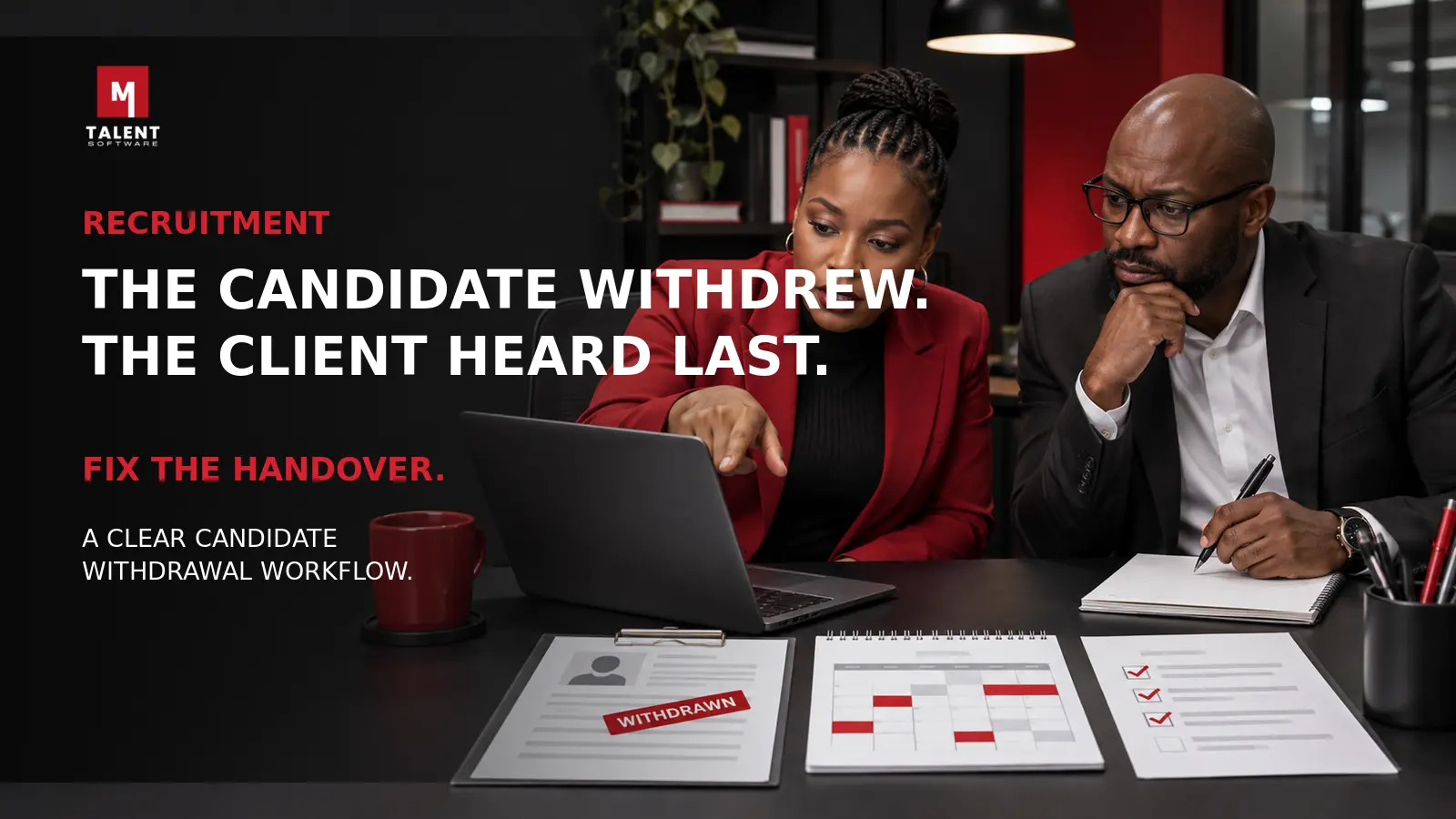
A candidate withdraws after an interview and tells the recruiter by email. The recruiter is in meetings, the vacancy still shows the candidate as active and a colleague confirms the next interview with the client. The client eventually learns about the withdrawal from the candidate or after asking for an update.
The withdrawal itself may be unavoidable. The poor handover is not. A clear workflow helps the team respond quickly, protect the candidate relationship and give the client an honest plan for what happens next.
Record the withdrawal immediately
As soon as the candidate communicates a clear decision, update the candidate’s position against the vacancy. Record the date, stage, channel and person who received the withdrawal. Keep the candidate’s own wording where it is useful and appropriate, rather than replacing it with an assumption.
If the message is unclear—perhaps the candidate cannot attend one interview but remains interested—confirm the position before marking them withdrawn. A status should describe what has actually happened.
Listen before closing the conversation
Acknowledge the candidate promptly and professionally. Where appropriate, ask whether they are comfortable sharing the main reason. They may have accepted another role, changed their salary expectations, faced a timing problem or reconsidered the opportunity after learning more.
The purpose is not to pressure them into continuing. It is to understand the situation, check whether a practical misunderstanding can be resolved and learn from the experience. Respect a candidate who does not want to provide more detail.
Stop the active recruitment steps
Review every action connected to the candidate and vacancy. Cancel interviews that should no longer happen, remove pending reminders, pause reference or document requests that are no longer required and tell colleagues who were preparing the next stage.
Do not leave the candidate in a shortlist, submission pack or interview schedule after withdrawal. An outdated record creates avoidable calls, emails and client confusion.
Give the client a controlled update
Decide who owns the client communication and when it must happen. The update should be timely, factual and proportionate. Explain that the candidate has withdrawn, identify the affected stage and set out the immediate recovery plan.
Avoid sharing personal details or the candidate’s private comments unless there is a clear and appropriate reason. The client needs enough information to make a hiring decision, not every detail of the recruiter’s conversation.
Bring a recovery plan, not only bad news
Review the remaining shortlist, previously screened candidates and search activity. Decide whether another candidate can progress, whether the search criteria need adjusting or whether the vacancy timeline should change.
Tell the client what the team will do next, who owns it and when the next update will arrive. A clear plan shows that the vacancy is still being managed even when the preferred candidate changes direction.
A practical example
A candidate completes a first interview and is invited back for a final meeting. The next morning, they email the recruiter to say they have accepted another offer. The recruiter reads the message but is called into an urgent client meeting and does not update the vacancy.
Later that day, a colleague confirms the final interview. The candidate replies that they have already withdrawn and copies the hiring manager. The client now sees an internal handover failure rather than a normal recruitment change.
With a clear process, the recruiter records the withdrawal when the email arrives, cancels the pending interview task and alerts the vacancy owner. The client receives a concise update before another invitation is sent. The team proposes the next suitable candidate and agrees a revised shortlist date.
The candidate is thanked for the update and remains eligible for an appropriate future conversation. The vacancy continues with an accurate record and clear ownership.
Protect the wider candidate relationship
Withdrawal from one vacancy does not always mean the candidate wants no future contact. Confirm whether they are open to other opportunities and update communication preferences where necessary. Do not treat a polite withdrawal as misconduct or remove a candidate from every search without a valid reason.
At the same time, record factual concerns if the candidate repeatedly fails to attend or provides conflicting information, following the organisation’s normal review process. Separate evidence from frustration.
Use consistent withdrawal reasons
A short, controlled list of reasons makes reporting more useful: accepted another role, compensation, location or travel, working pattern, process delay, role mismatch, counter-offer, personal circumstances or reason not shared.
Allow a brief note for context, but avoid turning the record into a long narrative. Consistent reasons make patterns easier to review without oversimplifying individual decisions.
Learn from the pattern
Review withdrawals by vacancy stage, client, role type, recruiter and reason. A cluster after first interview may point to a mismatch between the advert and the real role. Late withdrawals may reveal slow decisions, unclear communication or changing terms.
Not every withdrawal represents a process failure. The aim is to identify repeated, controllable causes and improve the brief, communication, timing or expectation-setting.
MyTalent Recruitment connects candidates, clients and opportunities through the recruitment journey. Explore Recruitment or talk to our team about the capabilities available for your agency.
When a candidate withdraws, the record, team and client should move together: acknowledge the decision, stop the wrong actions and make the next recruitment step clear.