
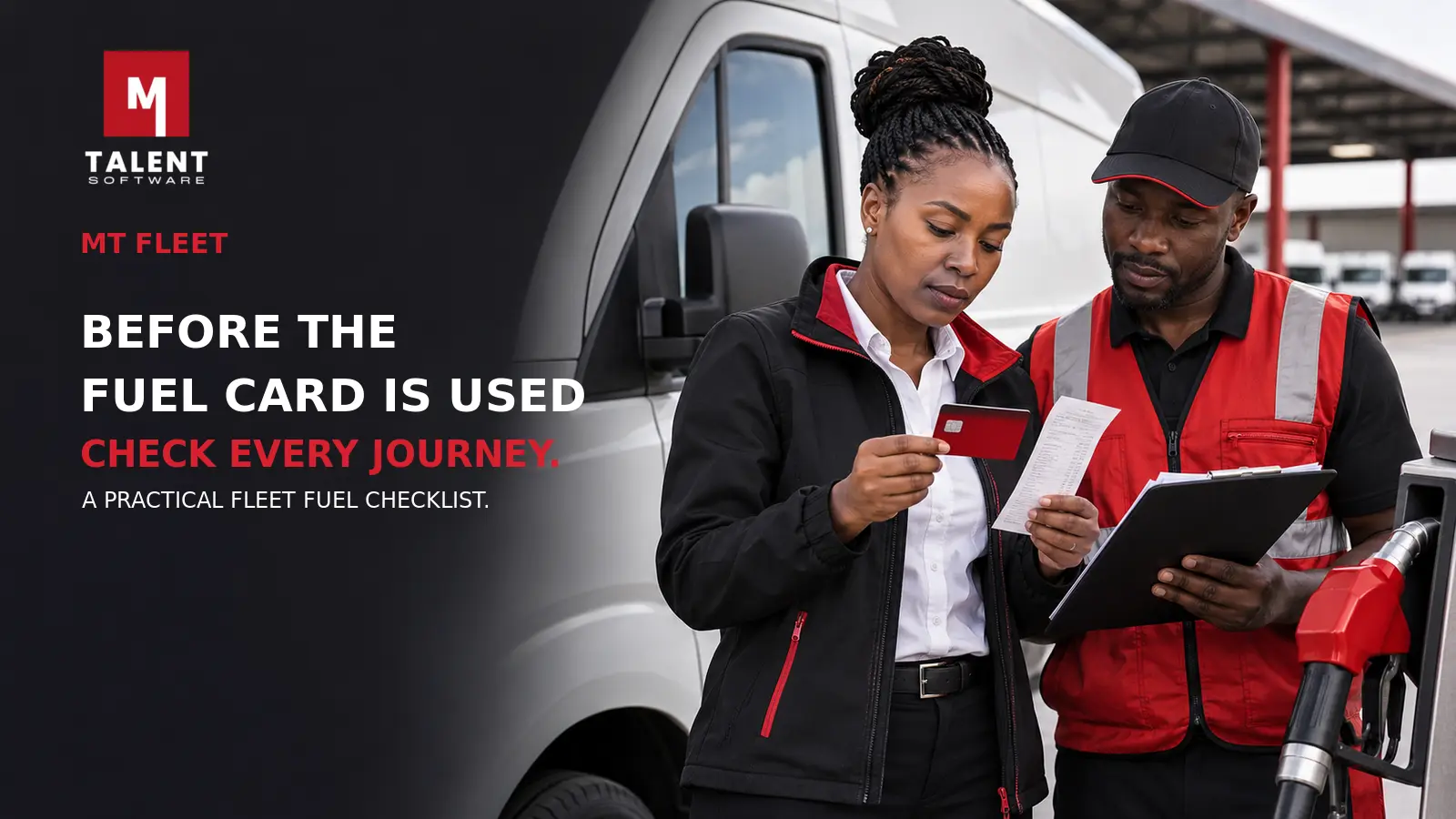
A fuel card can make a necessary purchase easier, but the transaction alone does not explain the journey. A fleet team still needs to know which vehicle was filled, who used the card, what the mileage was and whether the purchase fits the vehicle’s work.
If that context is captured only at month-end, the team may be searching through receipts, messages and driver memories long after the event. A short check before use creates a clearer record and makes later reconciliation more practical.
This checklist is general operational guidance. Adapt it to your organisation’s card rules, delegated authority, accounting process and employment policies.
1. Define who or what the card belongs to
Choose a consistent rule for each card. It may be assigned to one vehicle, one driver, a depot or a controlled pool. Record that assignment and make the limits clear before the card is issued.
If a shared card must move between people or vehicles, use a simple sign-out and return record. Capture the person taking it, the vehicle, the time, the expected journey and the person who approved the issue. A shared card should not become an unowned card.
2. Confirm the vehicle and journey
Before refuelling, identify the registration or fleet number and the driver responsible for the journey. Add a short business purpose, route or job reference where that helps the team understand the use.
This is especially important when drivers change vehicles during a shift. The card assignment, vehicle allocation and journey record should point to the same real-world movement. If they do not, resolve the mismatch before the transaction where practical, or record it as an exception.
3. Capture the mileage before fuel goes in
Record the odometer reading at the point of purchase, not from memory later. Check that it is higher than the previous accepted reading and broadly consistent with the journeys recorded since then.
A reading that goes backwards may be a typing error, the wrong vehicle or a changed instrument. A sudden large increase may reflect missing journey records. Neither automatically proves misuse; both deserve a clear note and an owner for follow-up.
4. Check the purchase makes sense
Confirm the correct fuel type for the vehicle. Consider whether the quantity is plausible in relation to the tank, the recent mileage and the amount already purchased. Where card rules restrict products, remind drivers which items are allowed and how non-fuel purchases should be handled.
The aim is not to make the driver calculate exact consumption at the pump. It is to catch obvious errors early: the wrong fuel, the wrong card, an unusually large quantity or a purchase that does not match the planned journey.
5. Keep the receipt connected to the transaction
Ask for a legible receipt or approved digital proof showing the date, time, supplier, amount, quantity and product. Add the vehicle, driver, odometer reading and journey reference if those details are not already linked elsewhere.
Submit the receipt through the agreed process promptly. A receipt in a glovebox is not yet a usable business record, and a card statement without operational context leaves the accounts and fleet teams to reconstruct the event.
6. Make exceptions visible
Real journeys do not always follow the normal path. A card may fail, a driver may need emergency fuel, a replacement vehicle may be used or a receipt may be lost. Define how those situations should be reported.
An exception record should show what happened, why the normal rule could not be followed, who approved the alternative, what evidence is available and what action remains. Keep the exception open until it has been reviewed rather than hiding it inside a general comment.
A practical example
A driver collects a pool vehicle for an urgent delivery. The vehicle’s usual fuel card is unavailable, so the depot issues a shared card. The driver refuels on the return journey, keeps the receipt and places it on the office desk.
At month-end, the statement shows the transaction but the receipt has been filed without a vehicle number. Two similar vans were operating that day, and neither mileage record mentions the fuel stop. The team cannot confidently connect the cost to the correct vehicle.
With a controlled checklist, the depot records the shared-card issue against the driver, van and delivery reference. The driver captures the odometer at the pump and writes the fleet number on the receipt. The temporary card use is marked as an exception with the reason and approver. Reconciliation then has one connected trail instead of several competing guesses.
Review the transaction while it is still fresh
Do not wait for a monthly meeting to inspect obvious gaps. A short, regular review can compare card transactions with receipts, vehicles, drivers, mileage and approved journeys. Assign missing information to a named person with a due date.
Use patterns carefully. Repeated missing mileage, late receipts or unexplained purchases may reveal a training need, a weak handover or a control problem. Investigate the facts before reaching a conclusion, and apply the organisation’s normal people and disciplinary processes where necessary.
Close with a complete record
A reconciled fuel transaction should identify the card, driver, vehicle, journey or business purpose, odometer reading, product, quantity, amount, receipt and any approved exception. The team should also be able to see who reviewed it and when.
MyTalent MT Fleet is presented around fleet operations, vehicle overview and your team. Explore MT Fleet or talk to our team about the capabilities available for your operation.
The practical standard is simple: before the fuel card is used, make sure the journey, vehicle and responsibility are already clear.