
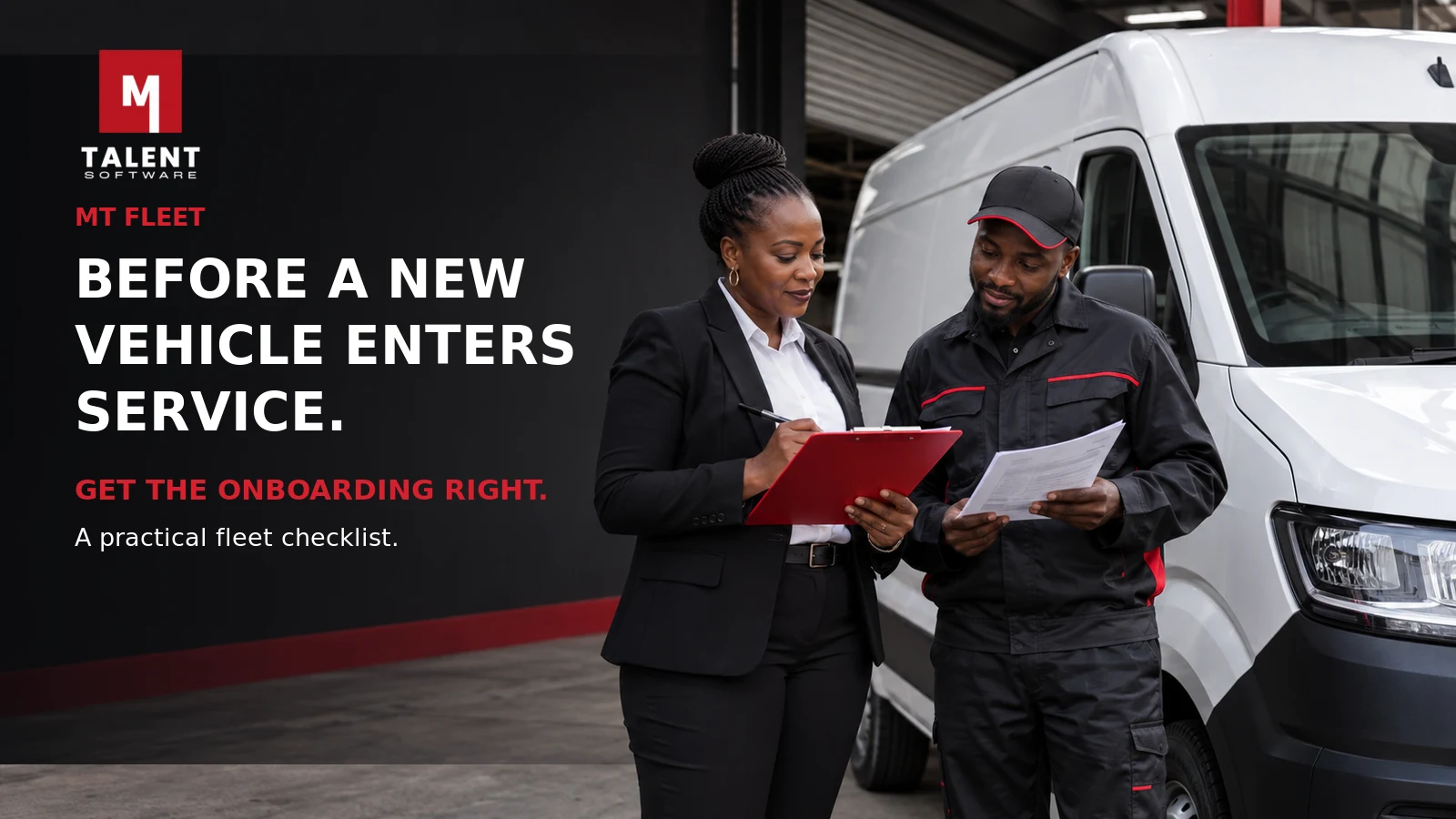
A new vehicle arrives at the depot and the team wants to put it to work immediately. The keys are handed to a driver, the registration document is filed and the vehicle is added to a spreadsheet later. A week afterwards, nobody can agree on the starting mileage, the spare key is missing and a warning light that appeared on delivery has become an urgent repair.
Fleet onboarding is the control point between acquiring a vehicle and operating it. A short, consistent process creates a reliable starting record, gives the driver a safe handover and prevents small uncertainties from becoming expensive investigations.
Confirm the vehicle's identity
Start with what the vehicle is, not where it is going. Match the registration number, VIN or chassis number, make, model, year and colour against the supplier documents. Record the engine number where it is relevant to your organisation's records.
Check every identifier directly on the vehicle. A typing error made during onboarding can follow the vehicle into servicing, insurance, licensing and disposal records. If the registration process is not complete, record the temporary position and the person responsible for closing it.
Gather the essential documents
Create one record for the documents the vehicle needs. Depending on the vehicle and its use, this may include proof of ownership or finance, registration and licence details, roadworthy evidence, insurance confirmation, warranty information, supplier invoices and certificates for fitted equipment.
Record each document's issue date, expiry date and owner for renewal. Do not treat a file upload as the end of the task. Someone should confirm that the document belongs to the correct vehicle, is readable and covers the intended use.
Establish a condition baseline
Inspect the vehicle in good light before it carries passengers, tools or goods. Record the odometer reading, fuel level and visible condition. Photograph all sides, the cab, load area, wheels and any existing marks. Note warning lights, unusual noises or missing trim.
Test the basic safety equipment and operating items that matter for the vehicle: lights, indicators, mirrors, tyres, seat belts, wipers, horn, locks and load restraints where applicable. A defect found at delivery should be assigned for resolution rather than buried inside a general note.
Account for keys, equipment and accessories
List everything handed over with the vehicle. That can include spare keys, licence disc, service book, manuals, jack, wheel tools, warning triangle, first-aid kit, fire extinguisher, tracking device information, fuel card and specialised equipment.
Record quantity, condition and storage location. If branding, shelving, a towbar or another accessory is still to be fitted, keep the vehicle in an onboarding status until the work is complete and verified.
Set the maintenance starting point
Capture the service interval, warranty conditions, current mileage, next service threshold and approved maintenance route. For a used vehicle, review available service history and unresolved recommendations. For a new vehicle, confirm what must be done to protect the warranty.
Agree who will monitor time- and mileage-based triggers. The first scheduled check should be visible before the vehicle leaves, not reconstructed after a service becomes overdue.
Allocate the vehicle deliberately
Record the vehicle's operational purpose, depot or branch, cost area and responsible manager. Identify the usual driver or authorised driver group, including any licence or training requirements that apply to the role.
The driver handover should cover pre-use checks, defect reporting, fuel and mileage recording, accident steps, security, permitted use and the process for returning keys. Ask the driver to acknowledge the vehicle's starting condition and the equipment received.
A practical example
A delivery business receives two similar panel vans on the same morning. One has a dent near the rear door and the other has a higher odometer reading because it was transferred from another branch. Both sets of keys are placed on the dispatch desk and the supplier paperwork is scanned under a single filename.
Without controlled onboarding, the dent may later be attributed to the wrong driver and the starting mileage may distort fuel and maintenance reviews. The spare keys can also be swapped without anyone noticing.
Using a checklist, the fleet manager creates a separate record for each van, verifies the VIN and registration, photographs the condition, records the odometer and equipment, attaches the correct documents and labels both key sets. The dent is logged as a supplier action. Each driver then signs for the right vehicle, condition and equipment.
Release only when the record is complete
Use a simple status path such as received, inspection in progress, awaiting documents or rectification, ready for allocation and in service. Define the evidence required before the final move. One named person should approve release and record the date.
Review the vehicle after its first week or first operating cycle. Confirm that no warning lights, missing items, documentation gaps or driver questions remain. Early feedback often exposes an onboarding omission while it is still easy to correct.
MT Fleet covers the fleet side of your business. Explore MT Fleet or talk to our team to confirm the capabilities available for your operation.
A vehicle is ready for service when its identity, documents, condition, equipment, maintenance plan and accountable driver all agree. That reliable starting point protects every decision that follows.